
Growing Your Own Food
Growing requirements; planting and maintenance; harvest; climate and seasonal adaptation.
Explore chapterA household growing guide
Published
Small leaves. A generous harvest of flavor.
Bring a little of the garden into everyday cooking. Learn which herbs suit your space, how to keep them growing, when to gather leaves, flowers or seeds, and how to keep their flavor for later.
Inside the complete chapter
20 plant groups and 4 practical guides. Every sheet is two-sided and stands on its own.
Choose cultivated herbs for your space, climate and kitchen.
Match light, drainage and everyday care to a pot-grown herb.
Harvest, dry or freeze herbs with safe storage in mind.
Check conditions, symptoms and likely causes before responding.
Cultivation, harvest and everyday culinary use for anise.
Cultivation, harvest and everyday culinary use for basil.
Cultivation, harvest and everyday culinary use for caraway.
Cultivation, harvest and everyday culinary use for chervil.
Cultivation, harvest and everyday culinary use for cilantro.
Cultivation, harvest and everyday culinary use for dill.
Cultivation, harvest and everyday culinary use for parsley.
Cultivation, harvest and everyday culinary use for chives.
Cultivation, harvest and everyday culinary use for fennel.
Cultivation, harvest and everyday culinary use for lovage.
Cultivation, harvest and everyday culinary use for mint.
Cultivation, harvest and everyday culinary use for tarragon.
Cultivation, harvest and everyday culinary use for lavender.
Cultivation, harvest and everyday culinary use for marjoram.
Cultivation, harvest and everyday culinary use for oregano.
Cultivation, harvest and everyday culinary use for rosemary.
Cultivation, harvest and everyday culinary use for sage.
Cultivation, harvest and everyday culinary use for thyme.
Grow borage for the garden and pollinators; no edible-use guidance.
Cultivation, harvest and everyday culinary use for nasturtium.
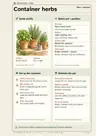 Container herbs
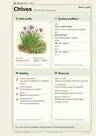 Chives
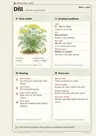 Dill
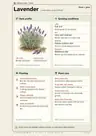 Lavender
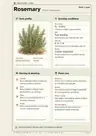 Rosemary
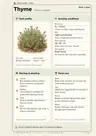 Thyme
One complete free sample
Read both sides of one complete sheet to see how the illustrations, short steps and practical details work together.
Sweet basil is the baseline.
Match the cultivar to your climate and space.
Use packet depth and local season cues.
Adjust watering to the soil and growing season.
Cold-sensitive; protect living plants from chilly weather.
Adapt to the named variety and local conditions.
Culinary amounts; no medicinal or essential-oil instructions.
Check the cause before choosing a treatment.
Free PDF: English · A4 · unpunched. On-screen holes are illustrative; the PDF has no drilling marks.
Download free Basil sampleUse each plant guide as it grows, from choosing a site to gathering the harvest. Planting and care follow seasonal cues; adapt them to your climate and named variety.
Reference material
Explore the university and public-agency guidance behind the growing, harvesting and food-handling advice.
Practical ideas to read alongside this chapter.
Three chapters that connect naturally with what you grow.
Growing requirements; planting and maintenance; harvest; climate and seasonal adaptation.
Explore chapterFruit selection; berries and tree fruit; pollination; planting and pruning; harvest and safe handling.
Explore chapterHome canning; drying; salting and drying meat; fermentation; butter and simple cheese; spoilage.
Explore chapter